Before the airfield
Long before the Cold War and the arrival of American jets, Oxfordshire was used by the British Army for manoeuvres and Portmeadow, outside Oxford, was used by military aircraft as a staging post for long distance flights. In 1913 airships flew from the grounds of Blenheim Palace and aeroplanes were based at Middleton Park.
First Heyford Airman
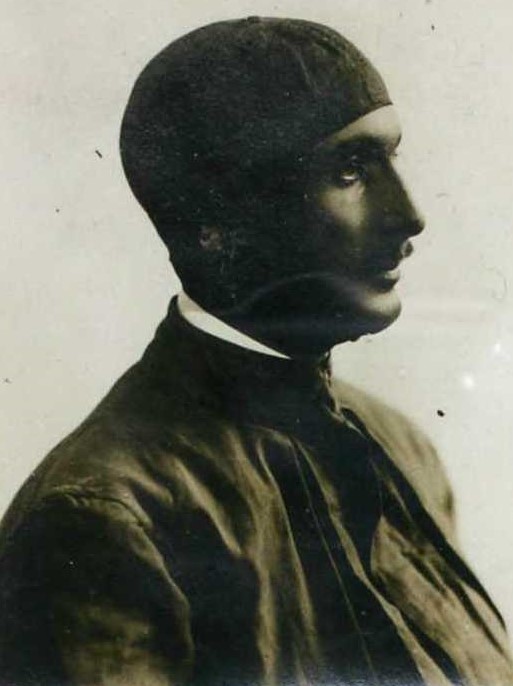
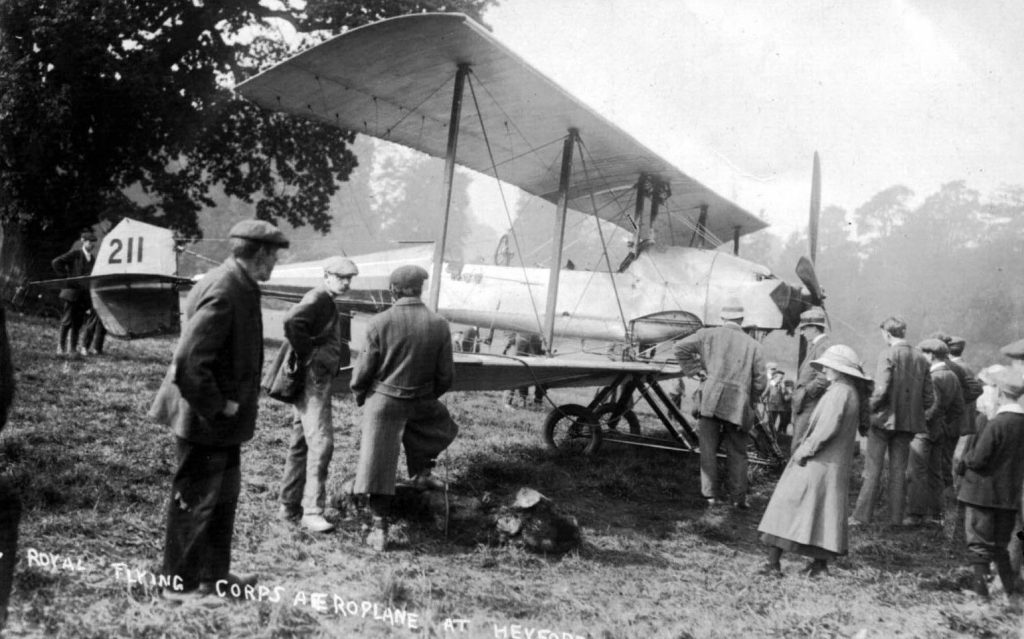
Captain Dawes took off from Farnborough, Hampshire, on 13 February, 1913, to fly to Montrose in Scotland. He landed in a field at Little Scotland, near Ardley, Oxfordshire (later to be incorporated in to the airbase), to ask for directions before flying on to Bloxham. He arrived at Montrose on 26 February.
The First RAF Upper Heyford
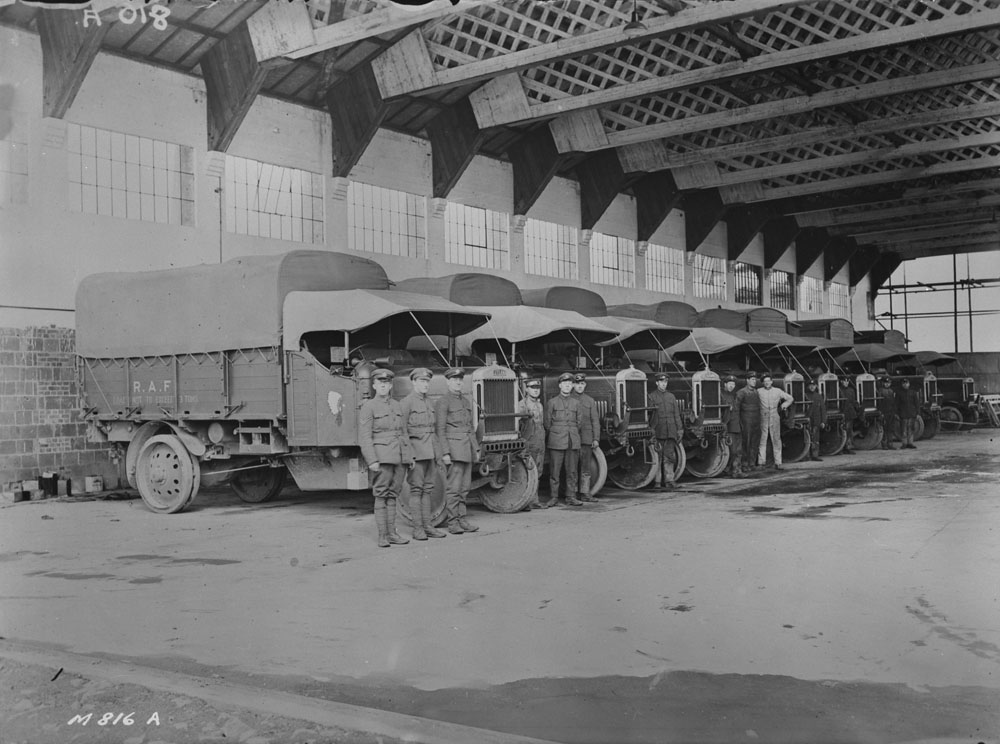
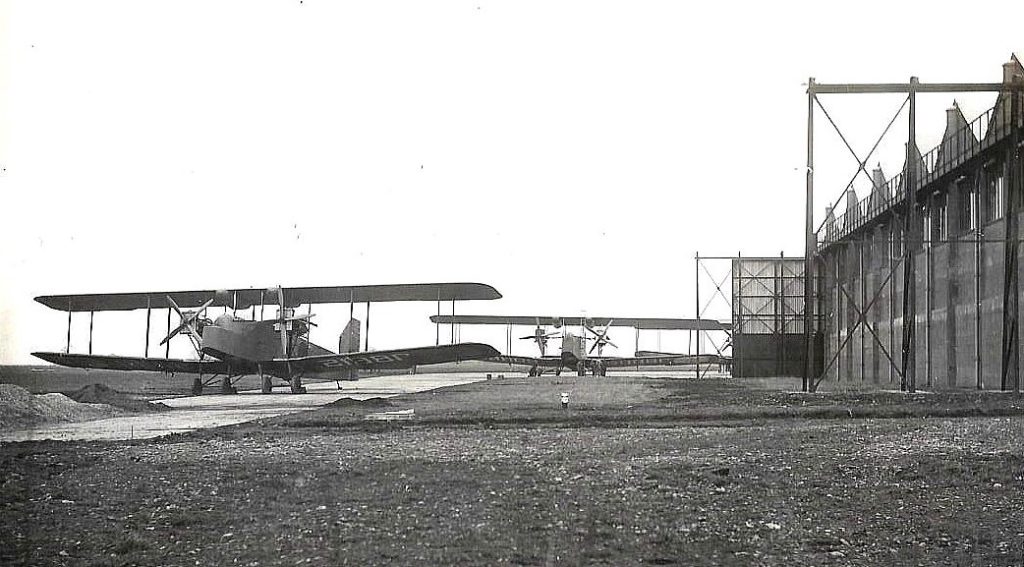
RAF Upper Heyford began its story in the last year of the Great War. Built in 1918, the airfield was part of a new network of training stations for Britain’s Royal Air Force which included Witney, Bicester and Weston-on-the-Green. Squadrons of armoured biplanes for infantry support were formed at Heyford as well as the Canadian Air Force. Peace brought about closure and the aerodrome was returned to agriculture in 1920.
A New Airfield
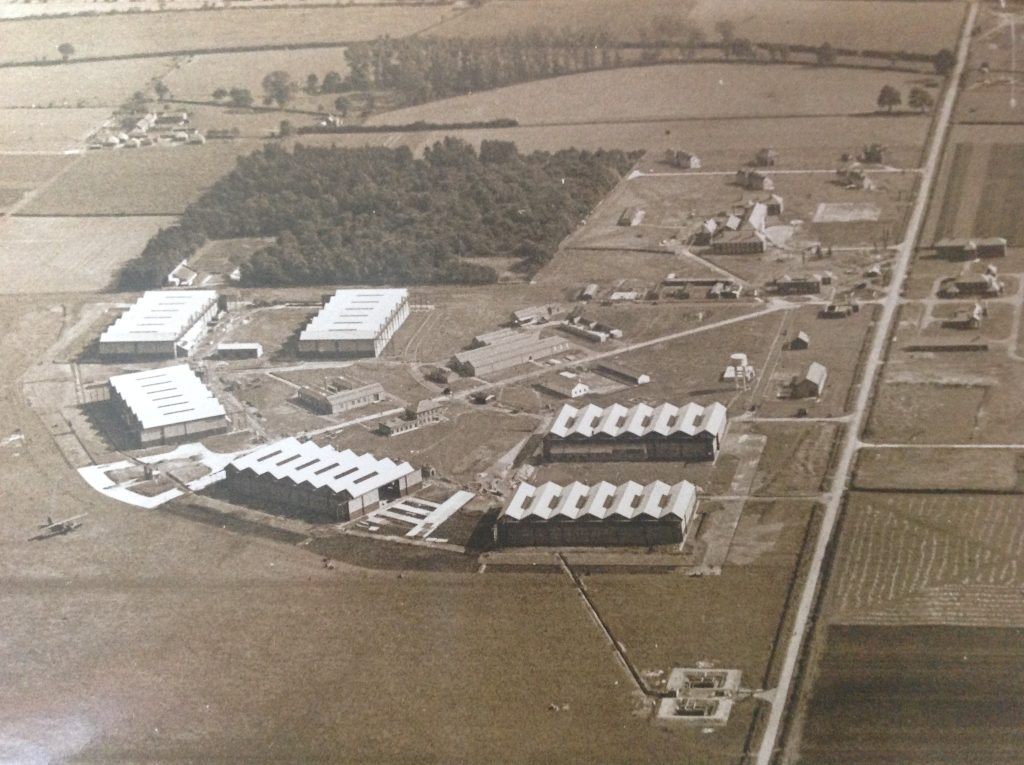
In 1923 France invaded the Ruhr to claim unpaid fines imposed on Germany for starting the Great War. This might have caused a war between Britain and France. After a Defence Review the RAF decided to return to Upper Heyford and purchased land in 1924 and 1925. Building work was completed in time for the November 1927 opening. RAF Upper Heyford was to become part of the Wessex Bombing Area housing a strategic bomber force capable of attacking French targets.
Bomber Base
The RAF concentrated on opening new airfields with the capacity to house newly formed squadrons. RAF Bicester, Abingdon and Harwell all joined Upper Heyford as part of the Wessex Bombing Area.
Bomber and Training Base
Hitler was elected Chancellor of Germany in 1933 and acknowledged the existence of the Luftwaffe in 1935. A war between Britain and Germany was now more likely than with France. This caused a problem for the Wessex Bombing Area as RAF bombers lacked the range to reach German targets. RAF Upper Heyford’s role changed as new squadrons soon moved out to airfields in Eastern England closer to Germany. When the Second World War broke out in 1939 Heyford’s bomber squadrons moved to new bases in France.
Training to Fly, Navigate and Bomb at Night
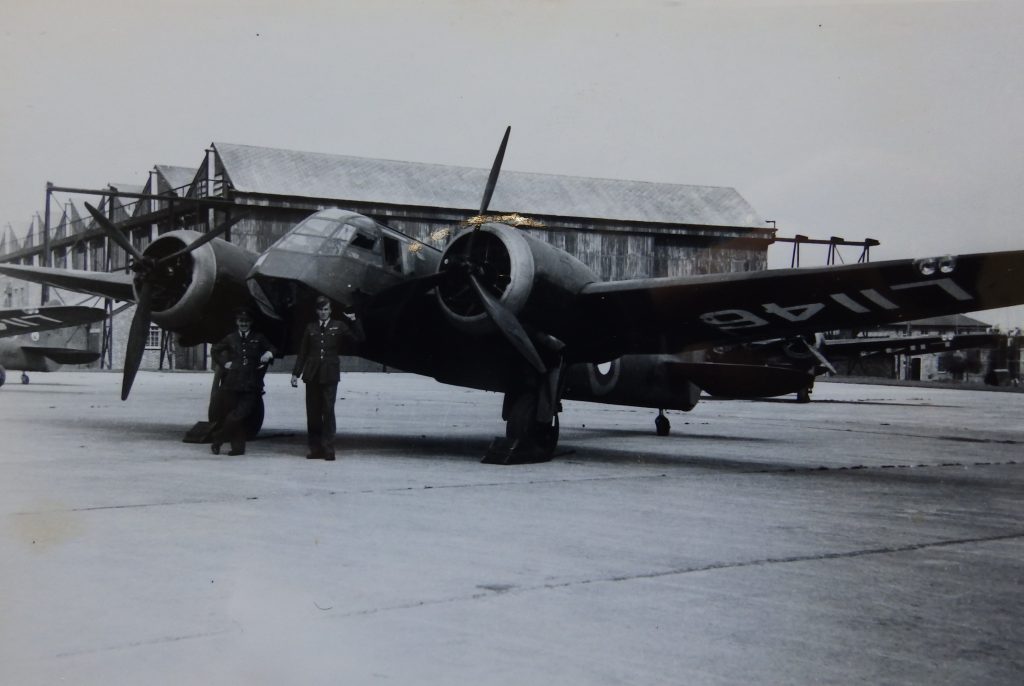
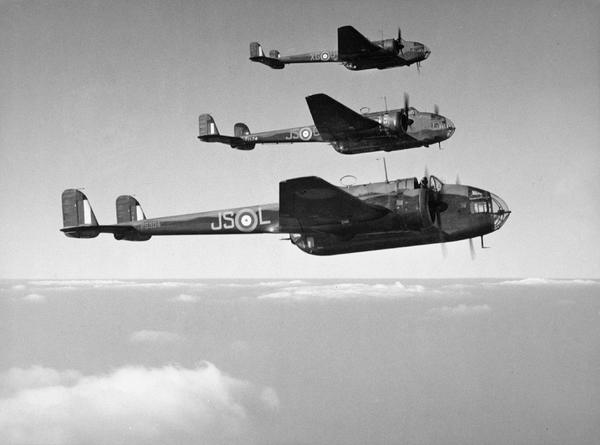
Blenheim light bombers were replaced at Upper Heyford by the Hampden medium bombers and Anson trainers of 7 and 76 Squadrons asked with training bomber aircrew. In 1940 16 Operational Training Unit was formed from the two training squadrons and RAF Brackley/ Croughton became the first of Heyford’s ‘satellite’ airfields as more facilities were needed.
Training to Fly, Navigate and Bomb at Night
Satellite stations were opened at Barford St John and Hinton-in-the-Hedges to allow more aircrew to be trained by 16 OTU. Local country houses, like Aynho, were used to billet trainees. Barracks and a hospital were built in Middleton Park.
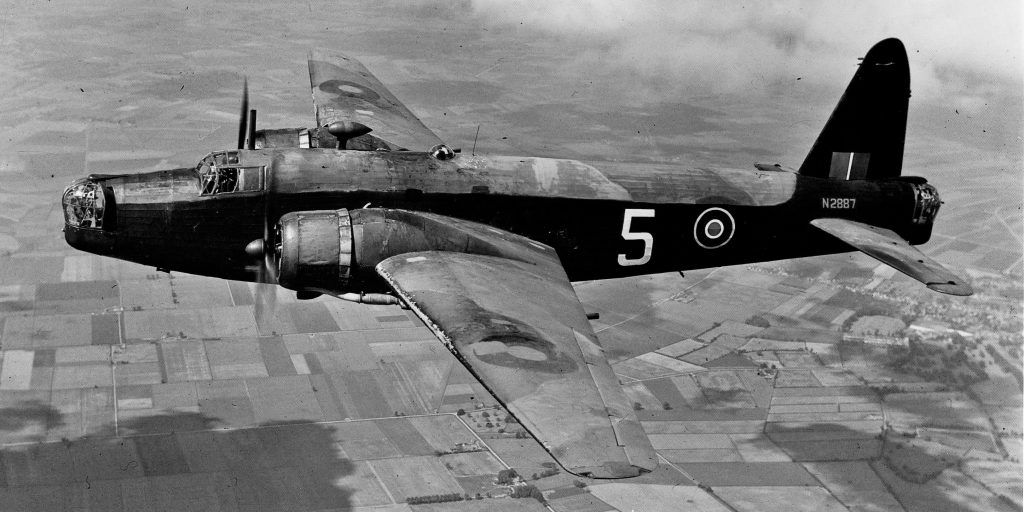
In 1942 the Anson and Hampden training aircraft were replaced by Vickers Wellingtons.
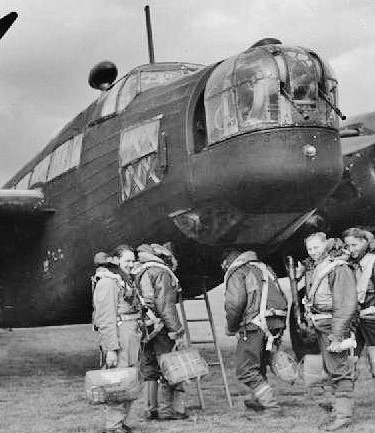
Most aircrew trained at RAF Upper Heyford were then posted to a Heavy Conversion Unit to learn how to operate the RAF Bomber Command’s Avro Lancaster, Handley-Page Halifax and Short Stirling four-engine aircraft.
1,000 Bomber Raids
In 1942 the RAF began a campaign of 1,000 bomber raids against Germany and Occupied Europe. From May 1942 Upper Heyford training aircraft, flown by 16 OTU instructors, took part in the raids.
On 10 September thirteen Wellington bomber took off from Upper Heyford to bomb Dusseldorf. Five failed to return.
Later that month it was decided not to use training aircraft as operational bombers as the loss of instructors affected training.
Mosquito Days
Concrete runways replaced the metal plated grass runways at RAF Upper Heyford during the Winter of 1944. 16 OTU moved to RAF Barford S John while the work was underway.
Bomber Command losses decreased as the Allies advanced and so there was less need to train heavy bomber aircrew.
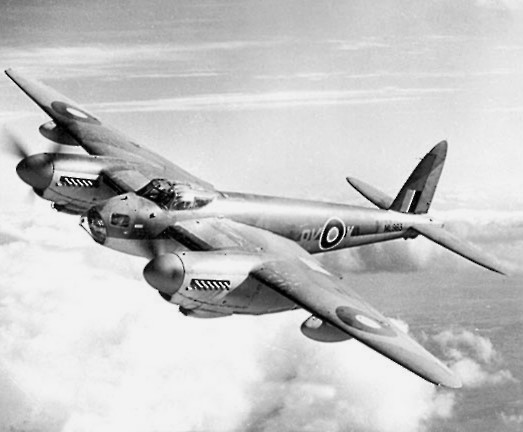
In December 1944 1655 Mosquito Training Unit arrived from RAF Marham in Norfolk and was renamed 16 OTU. It remained at Upper Heyford until 1946.
Parachute Training
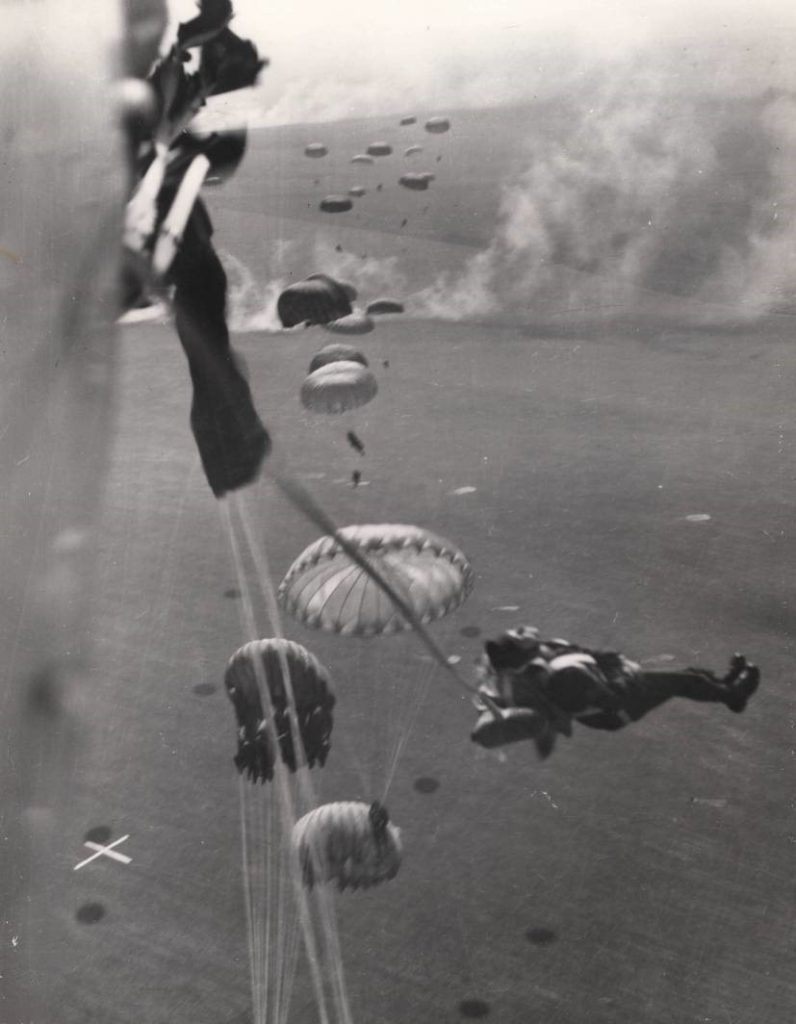
In March 1946 1 Parachute Training School arrived from Manchester Airport. From 1947 the School took on Glider Pilot training.
Trainees were billeted at Middleton Park and marched to and from RAF Upper Heyford everyday.
The A-Type hangars were used for ground training and a training tower from Manchester Airport was installed for simulated ‘jumps’. Actual ‘jumps’ were carried out from a tethered barrage balloon at RAF Weston-on-the-Green, followed by ‘jumps’ from aircraft based at Upper Heyford.
Training continued until 1950 when 1 Parachute and Glider Training School moved to RAF Abingdon to make way for the United States Air Force.
Visit the Heritage Centre
Step back to where it all began. Visit the Upper Heyford Heritage Centre to explore the origins of RAF Upper Heyford and the men and women who helped shape its early history.
- Monday: Closed
- Tuesday: Closed
- Wednesday: 10am - 4:30pm
- Thursday: Closed
- Friday: Closed
- Saturday: 12 - 4:30pm
- Sunday: 10am - 4:30pm