The USAF at RAF Upper Heyford 5

20th Tactical Fighter Wing 1970-1993

the USAF at RAF Upper Heyford

Low-level Nuclear Strike

The 20th Tactical Fighter Wing (20th TFW) was the longest serving unit stationed at RAF Upper Heyford. The 20th TFW maintained a key role in the NATO policy of nuclear deterrence against aggression from the Soviet Union and Warsaw Pact countries from  1970 until 1993.

the USAF at RAF Upper Heyford

Arrival

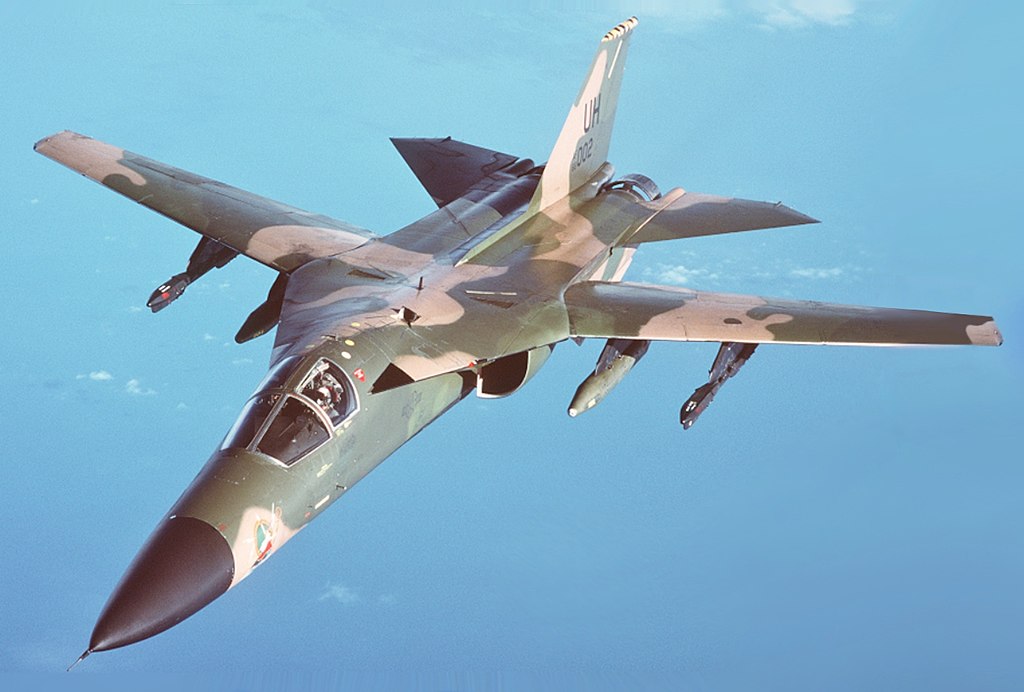
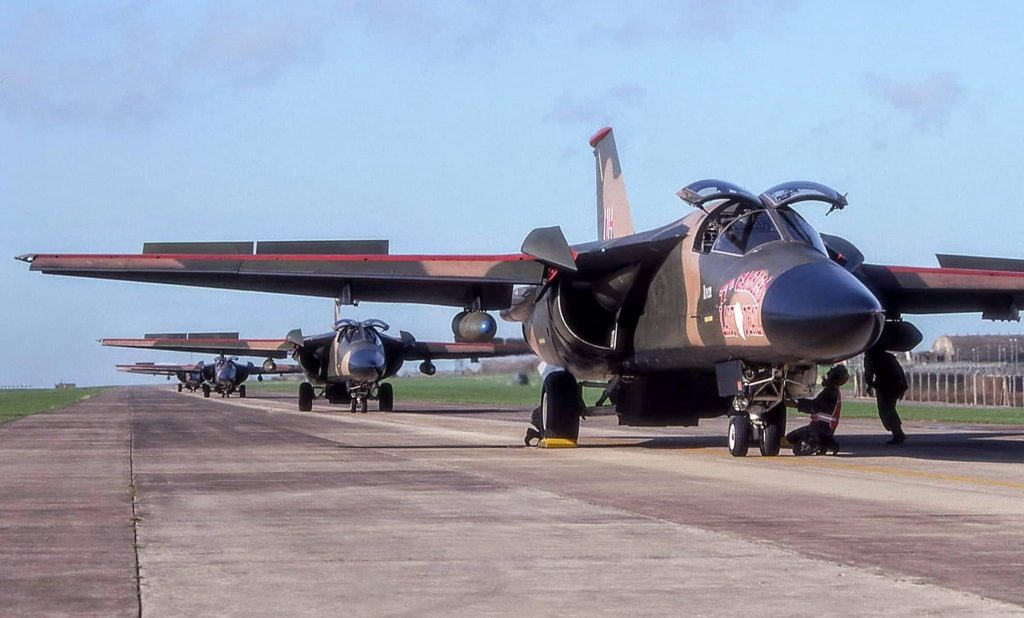
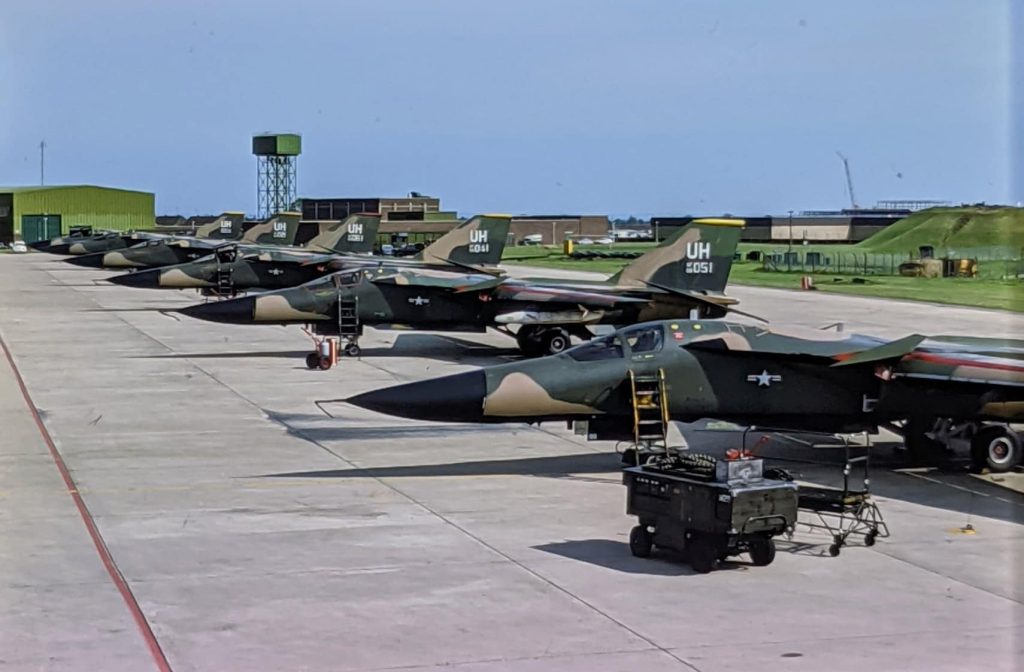
In 1970, the 20th Tactical Fighter Wing (20th TFW) relocated to RAF Upper Heyford from RAF Wethersfield (55th & 77th Tactical Fighter Squadrons) and RAF Woodbridge (79th TFS) to re-equip with the revolutionary ‘swingwing’ F-111. The predecessor of the 20th TFS had been based at RAF King’s Cliffe, in Northamptonshire, 1942-1945.

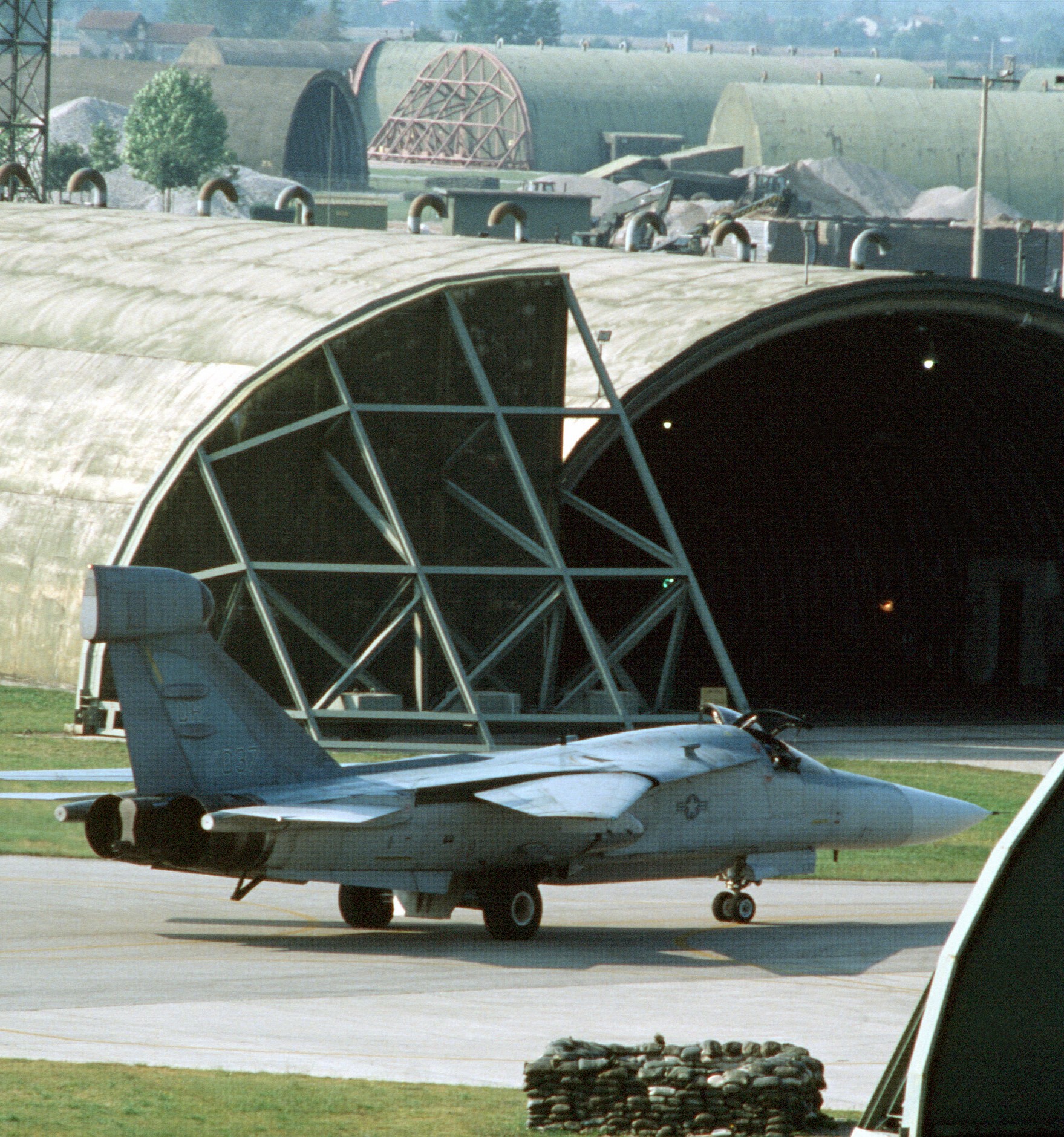
20th TFW F-100D Super Sabres were replaced by F-111Es between September 1970 and February 1971.

The primary role was nuclear strike with aircraft on constant 15-minute Victor Alert from 1970 until 1986. The F-111E was capable of  low-level strike in all weathers using terrain following radar. The F-111E could deliver high explosive bombs also and be armed with an M61 20mm Vulcan cannon or Sidewinder air-to-air missiles.


the USAF at RAF Upper Heyford

Squadrons

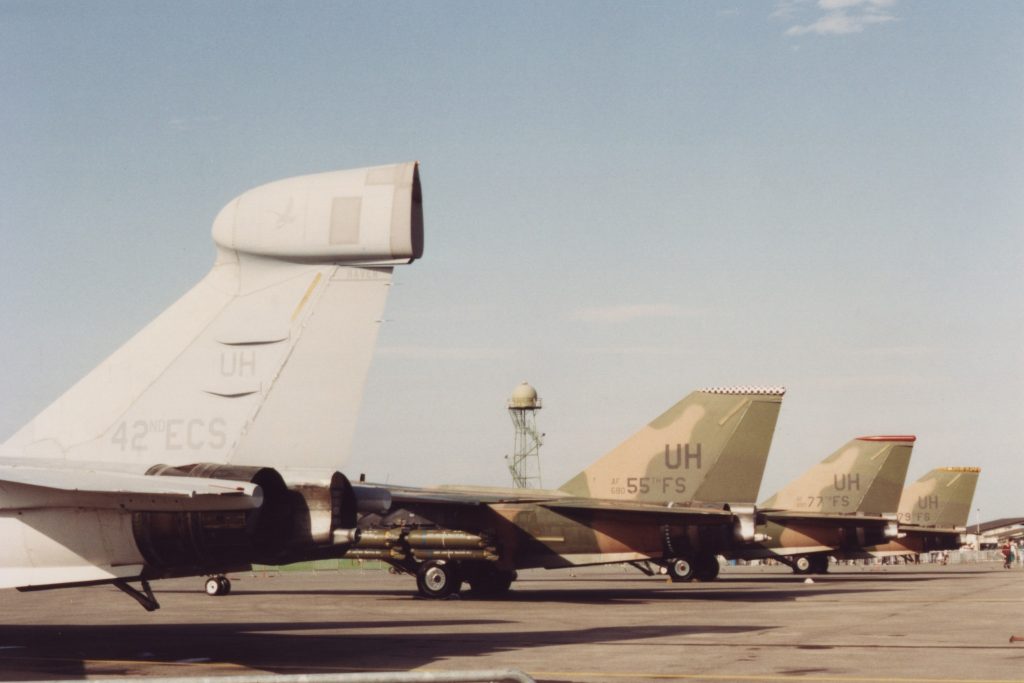
The 20th TFW consisted of three key flying squadrons:


The 20th TFW relied on a range of specialist units to maintain and operate the aircraft and the wider airbase. These included Security Police, Firefighters, Civil Engineers and British civilians employed by the UK Ministry of Defence Property Services Agency. 

In 1984 the 42nd Electronic Combat Squadron (ECS) arrived at Upper Heyford. The 42nd ECS operated the EF-111A Raven — a specialised variant of the F-111 designed to ‘jam’ radar, radar-controlled anti-aircraft missiles, guns and searchlights.

the USAF at RAF Upper Heyford

Operation El Dorado Canyon 1986

In 1985 the 20th TFW took part in a training exercise codenamed Ghost Rider. This proved that a long-range strike could be launched from the UK using inflight refuelling at night. 

Ghost Rider proved that a USAF strike on Libya in retaliation for Libyan support of terrorists was possible. Operation El Dorado Canyon was launched on 15 April 1986. EF-111A Ravens from Upper Heyford led the attack, jamming the Libyan defences. 48th TFW F-111Fs from RAF Lakenheath made the attack using laser-guided bombs.
the USAF at RAF Upper Heyford

The Gulf War
(1990-1991)

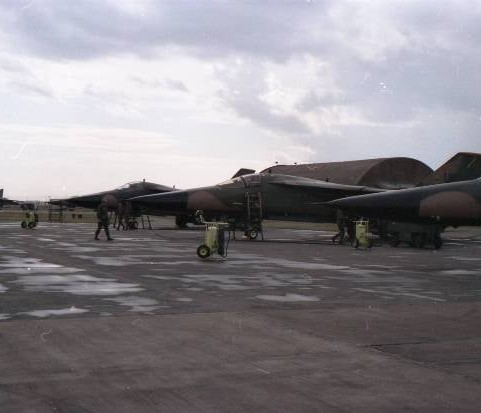
During the Gulf War (1990–1991), the 20th TFW deployed F-111Es and EF-111As to Turkey and Saudi Arabia as part of Operations Desert Shield and Desert Storm. Nearly 1,800 combat missions were flown against Iraqi targets, and over 4,700 tons of bombs were dropped. No aircraft were lost.

RAF Upper Heyford was designated as a Regional Evacuation Control Center and one of the A-type hangars was fitted out as a hospital. 1,408 aircraft passed through Heyford for maintenance work during the conflict.

the USAF at RAF Upper Heyford

Legacy

The 20th Fighter Wing deactivated at RAF Upper Heyford on 7 December 1993. The airbase closed in September 1994 bringing to an end over forty years when a part of rural Oxfordshire had been ‘Little America’.

Today the former airbase is the home of the thriving community of Heyford Park proud of its American and aviation heritage.

Visit Us

Experience Their Story

Step into the world of the 20th Tactical Fighter Wing and explore the Cold War legacy they left behind at RAF Upper Heyford.

Opening Hours